
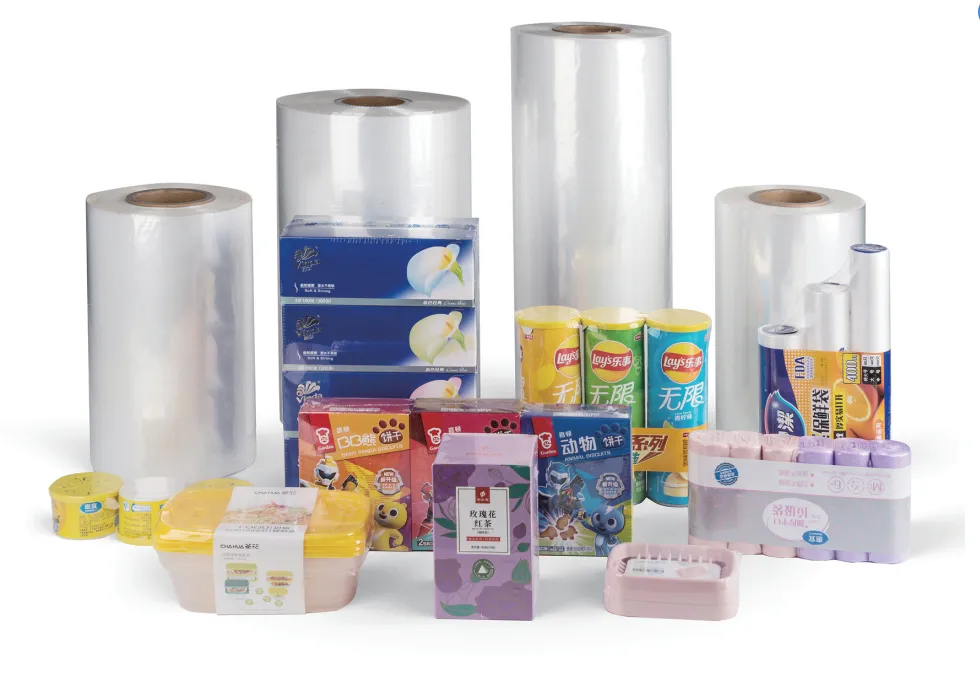
Compare (POF Shrink Film) vs (PVC Shrink Film) for Product Packaging
Table Of Contents
- 1. Introduction
- 2.What Are (POF) and (PVC) Shrink Films?
- 3.Clarity and Appearance: POF Wins Hands Down
- 4. Safety and Food Contact: POF Is Non-Negotiable
- 5.Environmental Impact and Recyclability
- 6. Durability and Puncture Resistance
- .7 Shrinkage and Heat Requirements
- 8.Cost: The One Area Where PVC Competes
- 9. Real-World Applications: When Each Film Makes Sense
- 10. What's Changing in the Industry
- 11.Our Recommendation
- 12. Ready to Make the Switch?
Introduction
When you're sourcing packaging materials, it's easy to get lost in the options. Two names keep popping up: (POF) and (PVC) shrink films. Both have been around for decades, both shrink tight around products, and both look pretty similar on the shelf. So what's the real difference? And more importantly, which one should you actually be using?
I'm going to lay this out honestly, because the choice between these two materials matters more than most businesses realize. At Regal Woven, we've manufactured both, and we can tell you that the right choice depends on what you're packaging, where you're selling it, and what your long-term business goals are.
What Are (POF) and (PVC) Shrink Films?
Let's start with the basics, because understanding the materials themselves explains everything that follows.
(POF shrink film), or Polyolefin, is made by co-extruding polypropylene (PP) and polyethylene (PE) together. Think of it as a layered sandwich of two different plastics, designed to work together. This combination creates a film that's flexible, durable, and crystal clear.
(PVC shrink film), or Polyvinyl Chloride, has been around since the 1930s. It's made from chlorinated plastic combined with plasticizers and stabilizers to give it flexibility. For decades, it was the go-to choice for shrink packaging simply because nothing else existed yet.
Here's where it gets important: the materials are fundamentally different, and those differences ripple through every aspect of performance, safety, and legality.
Clarity and Appearance: POF Wins Hands Down
Both films offer excellent transparency, that's one thing they have in common. But POF shrink films consistently deliver superior clarity and gloss.
(POF film) produces a smooth, wrinkle-free shrink with a brilliant shine that makes products look premium on retail shelves. If you're packaging cosmetics, food items, or consumer goods where visual appeal drives purchasing decisions, (POF clarity) is noticeably better. (PVC shrink film), on the other hand, tends to yellow over time, especially with UV exposure. During the shrinking process, it can form wrinkles and seams that affect the final appearance. For products sitting under fluorescent retail lighting for weeks, this matters more than you might think.
Winner for retail presentation: POF
Safety and Food Contact: POF Is Non-Negotiable
This is where the conversation becomes critical, and where regulatory changes are forcing industry decisions.
(POF shrink film) is FDA-approved and food-safe. It's odorless, non-toxic, and releases no harmful fumes during the shrinking process. You can safely wrap meat, cheese, produce, pharmaceuticals, and any food item without concern. Zero migration risk.
(PVC shrink film) releases harmful chemicals when heated. Specifically, it emits hydrogen chloride fumes and can release plasticizers like phthalates, substances that migrate into foods, especially fatty or oily products. These plasticizers are known endocrine disruptors linked to reproductive and developmental issues.
Here's the problem: regulatory agencies worldwide are taking notice. California's Reducing Toxics in Packaging Act (AB 2761) includes a provision that would prohibit the manufacture, sale, or distribution of PVC packaging within the state, starting January 2026. Similar legislation is spreading to other states like New Hampshire, New Jersey, and Vermont, plus countries including Canada, Spain, South Korea, and the Czech Republic.
If you're selling across state lines or exporting internationally, (PVC shrink film) is becoming a legal liability. Major retailers like Walmart and Amazon are actively moving away from PVC and explicitly prioritizing POF shrink films in their sustainability policies.
Winner for safety and compliance: POF
Environmental Impact and Recyclability
PVC's environmental footprint is significant. When landfilled and incinerated improperly, PVC can emit toxic dioxins harmful to humans and ecosystems. PVC production also generates roughly three times the greenhouse gas emissions compared to polyolefin films.
Recycling PVC is almost impossible. Most recyclers won't accept it because it contaminates polyethylene recycling streams, essentially making safe recycling impossible for the material.
(POF shrink film) is recyclable, biodegradable, and produces minimal environmental toxins. Cross-linked POF shrink films specifically offer enhanced durability while maintaining eco-friendly credentials.
Major initiatives like the Ellen MacArthur Foundation and global Plastics Pacts have already phased out PVC and identified POF as the sustainable standard for food packaging.
Winner for environmental responsibility: POF
Durability and Puncture Resistance
(POF shrink film) is inherently flexible and tough. It withstands temperature variations from -50°C to 100°C without becoming brittle. It's puncture-resistant and handles irregularly shaped products beautifully, whether your items have sharp edges or odd dimensions.
(PVC shrink film) becomes brittle in cold temperatures and is more prone to tearing and puncturing during handling. If your products experience rough transport or storage in temperature-controlled conditions, POF performs significantly better.
For industrial applications requiring durability, POF doesn't compromise. It shrinks tightly (up to 60% shrinkage ratio) while maintaining flexibility.
Winner for durability: POF
Shrinkage and Heat Requirements
Both films shrink effectively, but there's a practical difference.
(POF shrink film) shrinks evenly at lower temperatures (typically 120-140°C), requiring less energy during your packaging process. This means faster production speeds, lower equipment wear, and reduced operating costs.
(PVC shrink film) requires higher heat and more time to achieve full shrinkage. Higher temperatures also mean higher energy consumption, which adds to operational costs over time.
If you're running high-speed production lines, POF's efficiency advantage becomes a significant cost savings factor.
Winner for operational efficiency: POF
Cost: The One Area Where PVC Competes
Let's be honest, PVC is cheaper upfront. Material costs for (PVC shrink film) are roughly 20-30% lower than POF.
But here's the financial reality that changes the equation: when you calculate Total Cost of Ownership (TCO), POF comes out ahead. Why? Because:
Winner for long-term economics: POF
Real-World Applications: When Each Film Makes Sense
Use POF for:
- Food and beverage packaging (meats, cheeses, produce, bottled goods)
- Pharmaceuticals and cosmetics
- Consumer electronics and retail products
- Multipacks requiring FDA compliance
- Any product sold internationally
- Any packaging destined for major retailers
- Products where brand image matters
- Non-food industrial items where cost is the absolute priority
- Non-export, domestic-only applications
- Legacy systems with no upgrade plans
- Products explicitly exempt from packaging toxicity laws
Use PVC for (if at all):
Honestly? For most modern businesses, the "use PVC" category is shrinking fast. It's becoming a legacy choice rather than a forward-thinking one.
What's Changing in the Industry
The shift from (PVC shrink film) to (POF shrink film) isn't theoretical anymore, it's happening right now. Regulatory bodies in the US, EU, and other major markets are investigating PVC's safety profile and tightening restrictions. Industry leaders are moving preemptively rather than waiting for mandates.
If you haven't switched to POF shrink films, you should be planning the transition now rather than scrambling when regulations force it.
Our Recommendation
We offer a comprehensive range of POF shrink film solutions , including standard POF, cross-linked variants for extra durability, printed POF options for custom branding, and biodegradable alternatives. All are FDA-approved and suitable for food contact, with availability in thicknesses from 12 to 50 microns.
The only reason to choose PVC today is if cost is your singular concern and compliance, safety, and brand reputation don't matter. For businesses serious about growth, protection, and future-proofing their supply chain, the choice is clear.
Ready to Make the Switch?
If you're still using (PVC shrink film) or evaluating your packaging options, contact Regal Woven today. Our team has 15+ years of experience helping businesses transition to superior packaging materials. We'll evaluate your specific needs, recommend the right POF thickness and type for your application, and help you calculate the actual cost impact.
Your products deserve better protection. Your brand deserves a better presentation. And your business deserves to stay ahead of regulatory changes. That's what POF shrink film delivers.