
Table Of Contents
- 1. What are PP Woven Bags?
- 2. Types of PP Woven Bags
- 3. Common Uses of PP Woven Bags
- 4. Key Benefits of PP Woven Sacks
- 5. PP Woven Bag Manufacturing Process
- 6. How to Choose the Right PP Woven Packaging Bags
- 7. Frequently Asked Questions
PP Woven Bags: Types, Uses, Benefits & Manufacturing Process
PP woven bags have emerged as the main packaging solutions used across all industries in India. The PP woven bags comprise an interweaved fabric created using thin polypropylene tapes. These bags are extremely strong while at the same time being very light in weight, and that is precisely why these bags are used for carrying rice, cement, industrial chemicals and other commodities without breaking. Whether it is packaging for the factory, farm, or retail business, learning about the construction and PP woven bag uses will save you money and bring returns on them.
In this article, we have listed the types of PP woven bags, their uses, key advantages and the process of manufacturing them. At Regal Woven, we use this packaging information on a daily basis while manufacturing bags for our customers in agriculture, construction and chemical sectors.
What are PP Woven Bags?
PP woven bags, also known as woven polypropylene bags, are sacks produced by weaving polypropylene granules, which are heated to melt and then stretched to form tapes, followed by weaving using a loom. The resulting material has characteristics similar to those of fabric but with the durability and water-resistance qualities of plastic. Since the tapes are woven rather than moulded to form one piece of material, the resulting fabric is flexible, breathable, and tear-resistant under heavy weight. PP woven sacks have, therefore, proved to be an ideal alternative to jute and paper sacks in all bulk packing uses.
Types of PP Woven Bags
All PP woven bags are not alike in their construction. The weaving, coating, and finish differ from one another according to the use and application of the bag. The table below gives a summary of all kinds of PP woven bags before going into more detail about them.
| Type | Key Feature | Best Suited For |
|---|---|---|
| Standard / Plain Bags | Breathable, uncoated weave | Grains, animal feed, seeds |
| Laminated / Coated Bags | A thin plastic layer blocks moisture | Sugar, chemicals, fertilizers |
| BOPP Printed Bags | Glossy printed finish | Retail and branded packaging |
| Valve Bags | Built-in corner valve for filling | Cement and powder plants |
| FIBC / Jumbo Bags | Large format, 1–2 ton capacity | Bulk minerals, industrial cargo |
Standard / Plain Bags
Bags made from plain PP woven material are the most affordable and easiest to manufacture. The bags lack any kind of coating, which makes the bag porous in nature; hence, they can be used to pack grains and animal feed where some air circulation is required to prevent the accumulation of moisture.
Laminated / Coated Bags
The laminated bags have another coat of polymer film applied to the woven material. This seal ensures that any minute spaces in the woven tapes are sealed, ensuring that water, dust, or pests do not get into the bags. These PP woven packaging bags are highly preferred for packaging perishable materials such as sugar, chemical powders, and fertilizers.
BOPP Printed Bags
The BOPP printed bags have a biaxially orientated polypropylene film applied to their exterior that provides a shiny gloss finish. This is done by brands in situations where the bag itself serves a promotional function because it ensures that any brand logo, batch code, or product information can be read easily.
Valve Bags
The valve bag features a tiny hole at one end and not a wide-open top like other types of bags. The valve bag is very convenient in automated packaging machines since it can be filled quickly before sealing due to pressure.
FIBC / Jumbo Bags
Flexible Intermediate Bulk Containers, or jumbo bags, are the giants of the PP woven sacks family. Built to carry one to two tonnes of material at a time, they typically feature lifting loops and are used with cranes or forklifts. Mining, chemical, and bulk food industries use them to move large volumes efficiently without repackaging into smaller sacks.
Common Uses of PP Woven Bags
The versatility of PP woven bags comes from how easily the fabric can be adjusted for weight, coating, and size. A few industries account for most of the demand.
Agriculture and Food Grain Storage
Common packaging used for storing and transporting rice, wheat, corn, pulses, and seeds is PP woven bags that can either be laminated or simple bags. They offer protection to the grains against moisture and insects while still being easy to carry.
Construction and Building Materials
Construction materials like sand, gravel, and cement, among others, must be packaged in ways that will withstand the rigours of transportation. The most common packaging options for such items include valve bags and laminated sacks.
Chemicals, Minerals and Industrial Use
Sometimes, plastic granules, mineral powders and other types of industrial chemicals need additional protection from contamination or leakage. Laminated and FIBC bags are widely used for this purpose because the additional layer of material provides some kind of protection and less packaging is required.
Retail Packaging and Waste Management
The PP woven bags at the consumer level are used to pack sugar and flour in stores. The thick PP bags without any printing on them are used for disposing of building waste and trash. This is because of their reusable nature.
Key Benefits of PP Woven Sacks
The fact that PP woven bags have overtaken jute and paper in many sectors can be attributed to a few distinct benefits. These bags do not tear along the stitching line even under the weight of loads between 25 kg and 100 kg and thus become very useful when bags need to be stacked, handled and shipped long distances. Moreover, the durability aspect means that many people reuse the bags several times before discarding them, hence lowering the total cost of packaging.
This performance traces back to the base material itself:polypropylene is a mechanically rugged thermoplastic with high resistance to chemicals, which is why it holds up so well as woven packaging even under rough handling. On top of the physical performance, the raw material and weaving process keep production costs low compared to alternatives like jute or paper, which is why PP woven sacks remain the default choice for bulk industrial packaging.
PP Woven Bag Manufacturing Process
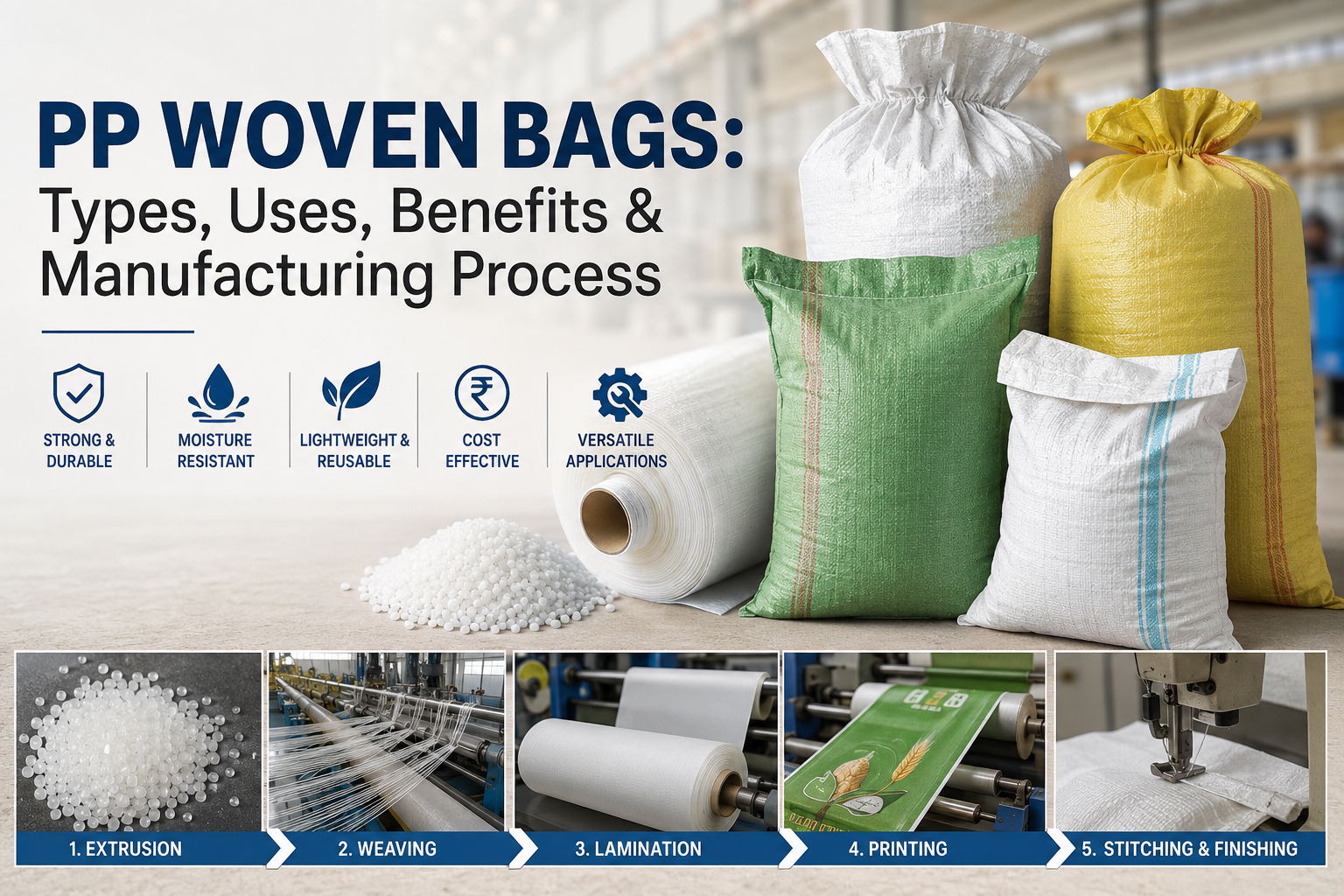
Making a PP woven bag involves five main stages, each affecting the final strength and finish of the sack.
1. Extrusion: Polypropylene pellets are moulded into a thin flat film that is slit into small tapes and then stretched to enhance its tensile strength.
2. Weaving: The tapes are then put through looms — circular or flat according to the type of bag being produced — where they are woven together to form a very sturdy material.
3. Lamination: If the bags require any moisture-proof qualities, then the lamination process is done, where a thin polymer layer is heat-bonded to the woven fabric.
4. Printing: This involves printing brand logos and product information on the bags by means of flexographic and rotogravure printing methods.
5. Stitching and Finishing: Finally, the material is cut to size, and the bottom is stitched together and then packed.
How to Choose the Right PP Woven Packaging Bags
Choosing the right bag depends on the suitability of the bag to the contents it is supposed to hold and how it is to be used. Air-permeable bags are suitable for holding dry commodities that require breathability, whereas laminated or BOPP printed bags are suitable for those commodities that require moisture resistance or shelf appearance. When dealing with heavy industrial loads, valve bags and FIBC sacks ensure faster handling and minimized risk of damaging the contents in transit.
The buyer should be sure to look at the tape denier, sewing quality, and fabric GSM of a bag before making an order for large quantities of it because these elements determine how heavy a bag is suitable for. A comprehensive review of the woven PP bags by Regal Woven will be helpful in determining the right specification for the product.
Need help choosing the right packaging materials for your production line? Get in touch with our team.
Frequently Asked Questions
What is the difference between PP woven bags and PP woven sacks?
Both terms describe the same product. "Bags" and "sacks" are used interchangeably in the industry, though "sacks" is more common for larger, heavy-duty formats like valve and FIBC bags.
Are PP woven bags waterproof?
Plain woven bags are breathable, not waterproof. Laminated PP woven bags add a polymer coating that blocks moisture, making them suitable for products sensitive to humidity.
How much weight can a PP woven bag hold?
Standard PP woven bags typically carry 25 kg to 50 kg, while FIBC or jumbo bags are built to hold one to two tonnes depending on the fabric strength and stitching.
Can PP woven bags be reused?
Yes. Their strong weave allows most PP woven bags to be reused multiple times before wear affects their load-bearing capacity, which also makes them more cost-effective over time.
Which PP woven bag type is best for cement packaging?
Valve bags are the standard choice for cement, since their built-in corner valve supports fast, automated filling and reduces material spillage on the production line.