Table Of Contents
- 1. Top Packaging Trends in India for Manufacturing Businesses in 2026
- 2. Why Packaging Trends Are Changing So Fast in 2026
- 3. Sustainability and Regulatory Compliance Take the Lead
- 4. Quick Commerce and E-Commerce Are Reshaping Packaging Design
- 5. Smart Packaging Solutions Powered by Technology
- 6. Where POF Shrink Film Fits into India's Sustainable Packaging Story
- 7. Comparing Packaging Films and Materials for 2026
- 8. Innovative Packaging Solutions Manufacturing Businesses Should Adopt Now
- 9. How Regal Woven Helps Manufacturing Businesses Stay Ahead
- 10. Conclusion
- 11. Frequently Asked Questions
Top Packaging Trends in India for Manufacturing Businesses in 2026
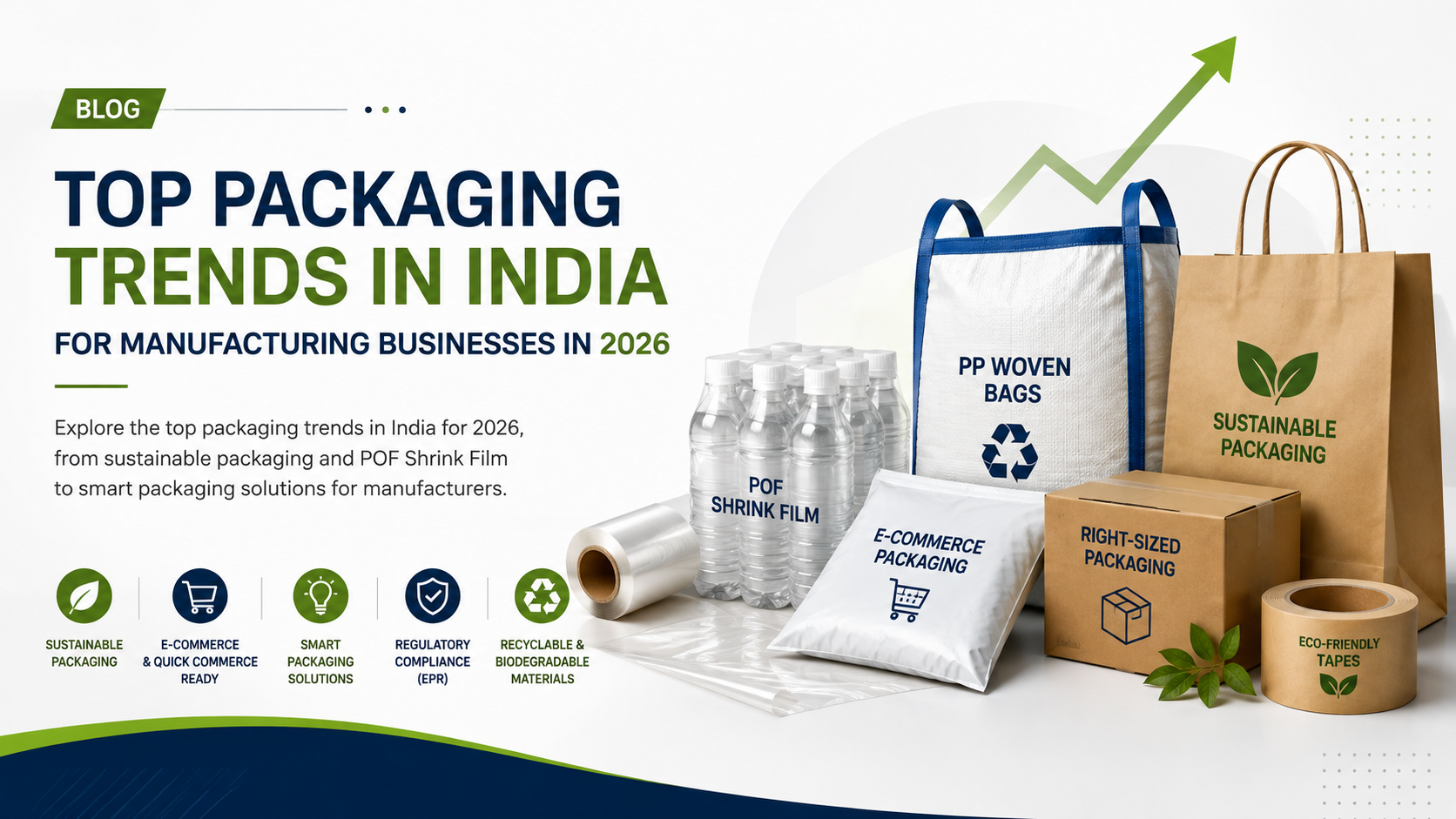
The packaging trends in India have never been more dynamic than they are now. Apart from considering cost and functionality, Indian manufacturers have started considering compliance, branding, and environmental sustainability. There are three major factors leading to such a shift in packaging requirements in 2026: a rapid shift from single-use plastic to paper and biodegradable materials, rapid growth of quick-commerce and e-commerce, and regulatory pressures in favour of sustainable packaging in India. For any manufacturing company that supplies bulk goods and retails products for individual consumption, it is crucial to recognize these trends.
In this blog, we discuss the major trends in packaging for 2026, explain their significance, and show how different materials can be used to comply with these trends.
Why Packaging Trends Are Changing So Fast in 2026
Some years back, the primary concern for packaging was durability and cost. This is no longer the case. There are now strict regulations about plastic waste in India, and consumers, especially young ones, are conscious of the environmental impact of a brand's packaging. Meanwhile, quick commerce apps have revolutionized the speed at which products are transported from warehouse to doorsteps, thus creating the need for lightweight yet durable packaging films.
Companies offering bulk, retail, or e-commerce packages find themselves caught up in all of this. They require packaging that will satisfy legal standards, will withstand the inflexibilities of transport, and will foster brand trust.
Sustainability and Regulatory Compliance Take the Lead
Sustainability is not simply a slogan anymore. It has turned into a legal mandate for all manufacturing companies in India, and this has changed the way packaging films and bags are designed.
The Shift from Plastic to Paper and Bio-Based Materials
Companies are rapidly moving away from the use of one-off plastics. Paper packaging and biodegradable film are increasingly being used in place of the old plastic liner in various sectors, including food and retail products. Not only is this due to regulations, but it is also because customers are increasingly demanding eco-friendly packaging. Industry coverage of flexible packaging trends shows manufacturers reworking material choices to meet both regulatory and consumer expectations, pushing paper and bio-based alternatives into categories once dominated by plastic film.
Mono-Material Design for Easier Recycling
The other significant trend here is the use of mono-material packaging, which entails replacing materials such as mixed plastics, films, and papers with just one type of material. The recycling of mixed materials in packages is quite challenging, as sorting plants are not able to remove the layers, but when it comes to the mono-material pouch or bag, it can be recycled in the regular recycling process. Manufacturers should come up with different designs for their bags and films using one type of material.
Extended Producer Responsibility Compliance Gets Stricter
Extended Producer Responsibility, or EPR compliance, now requires manufacturers to track and report how much packaging they put into the market and how it gets collected or recycled afterwards. That is making companies adopt recyclable or biodegradable films by default, rather than as an afterthought, and companies that have reporting planned for the future save on costs at the last minute.
Quick Commerce and E-Commerce Are Reshaping Packaging Design
The sudden rise in India's quick commerce has brought about a shift in packaging strategies in a matter of days. Now products have to be able to withstand numerous touches within an hour of ordering them.
Right-Sized Boxes Cut Shipping Costs and Waste
In addition, manufacturers are using custom sizing for boxes that closely fit the product within. As a result, there is reduced wastage, reduced fill material, and decreased weight for shipping purposes, which decreases cost per unit shipped. In addition, there is reduced packaging wastage sent to consumers.
Rugged Packaging Built for Instant Delivery
Quick-commerce packaging has to survive fast scooter deliveries, stacking, and last-minute handling, so outer layers are being built tougher and more compact than traditional retail packaging. PP woven bags and BOPP laminated films are popular here because they combine strength with lighter weight, keeping delivery costs down without sacrificing product protection.
Premium Unboxing Experience for D2C Brands
Brands using direct-to-consumer distribution are now spending a lot more time focusing on the visual appeal of the package once it is received by the consumer, as opening the package has become part of the overall brand experience and is shared online.
Smart Packaging Solutions Powered by Technology
Digital tools are now built directly into packaging materials, turning a simple wrapper or bag into a source of information and trust.
QR Codes for Authentication and Traceability
It has become common practice for a number of companies to print active QR codes on their labels and films. Scanning the QR code helps verify that the item is not fake and enables you to know about its expiry or batch number and how to use the item. This is an easy smart packaging solution for manufacturers to implement.
AI-Driven Design Optimization
There is also the use of automation technology to test the packaging design before going into production. This technology can tell the maximum capacity of the carton or bag to hold before breaking and recommend thinner packaging material in areas that will not weaken the package. This reduces the consumption of raw materials and saves cost.
Where POF Shrink Film Fits into India's Sustainable Packaging Story
POF Shrink Film is very much at the heart of these trends. POF Shrink Film is already thinner and clearer than PVC Shrink Film, but even better, newer versions have been developed that are cross-linked and biodegradable and are being used by companies that require good shelf appeal but don't want to increase their use of plastics.
At Regal Woven, POF Shrink Film is manufactured with a focus on clarity, durability, and compliance with the sustainability standards that Indian regulators and buyers now expect. It is one of the more practical starting points for manufacturers who want to move toward eco-friendly packaging without changing their entire production line overnight.
Comparing Packaging Films and Materials for 2026
The table below gives manufacturers a quick reference on how different packaging materials line up against this year's trends.
| Packaging Type | Key 2026 Trend | Best Suited For | Sustainability Impact |
|---|---|---|---|
| PP Woven Bags | UV-stable, reinforced weaves for bulk handling | Agriculture, cement, chemicals, food grains | Reusable and durable, cuts repeat material use |
| POF Shrink Film | Biodegradable, cross-linked variants | Retail bundling, e-commerce multipacks | Compostable options lower long-term plastic waste |
| BOPP Laminated Bags | Mono-material laminates for easier recycling | FMCG, fertilizer, food packaging | Simplifies recycling, supports EPR compliance |
| Paper-Based Packaging | Bio-based coatings replacing plastic liners | D2C unboxing, quick-commerce boxes | Biodegradable and renewable source material |
| Smart Labels | QR-enabled authentication layers | Pharma, branded consumer goods | Reduces counterfeit-related waste, improves traceability |
Innovative Packaging Solutions Manufacturing Businesses Should Adopt Now
Innovative packaging solutions do not require manufacturers to renovate all processes simultaneously. They should begin with the film or bag used in high quantities to see if there are other options to replace them. Another inexpensive process is using smaller-sized shipping boxes, as they reduce weight. Also, they just need to introduce QR-based traceability on their highest-risk product line to solve any authentication issues without completely overhauling the product.
Working with a packaging partner that already manufactures compliant, tested materials makes this transition faster, since it removes the need to validate every new film or bag type from scratch.
How Regal Woven Helps Manufacturing Businesses Stay Ahead
At Regal Woven, we provide PP woven bags, BOPP laminated bags, and POF Shrink Film to manufacturing companies in sectors such as agriculture, food, chemicals, and retail based on the existing requirements of compliance and sustainability. Since these materials already incorporate the considerations of sustainability and quick commerce, companies will not be forced to choose between meeting the new regulations and continuing the supply chain operations. The films required for packaging in mass shipment or retail bundles can be chosen according to the actual need of the product.
Conclusion
The future of packaging in India would continue to see developments in sustainable packaging, quick commerce toughness, and smart traceable materials until 2026 and beyond. Manufacturers who begin to adapt to these changes now by using mono-material bags, biodegradable POF Shrink film, or even basic traceability via QR codes will be better able to comply with regulations and customer demands without any last-minute rush. Packaging film selection has become a matter of business, too.
Ready to explore sustainable packaging for your business? Browse our POF Shrink Film range. Need help choosing the right packaging materials for your production line? Get in touch with our team.
Frequently Asked Questions
What is the biggest packaging trend in India for 2026?
The clearest trend is the shift away from single-use plastic toward paper-based, bio-based, and mono-material packaging, driven largely by stricter EPR rules and rising demand for eco-friendly packaging.
Is POF Shrink Film a sustainable packaging option?
Yes, especially newer cross-linked and biodegradable POF Shrink Film variants, which offer the clarity and strength of standard shrink film while being easier to compost or recycle compared to older plastic films.
How is quick commerce changing packaging design?
Quick commerce demands packaging that is lightweight yet rugged enough to survive fast, multi-stop deliveries, which has led manufacturers to adopt right-sized boxes and tougher outer layers like PP woven bags and BOPP laminated film.
What are smart packaging solutions?
Smart packaging solutions include features like QR codes for authentication and traceability, along with AI-based design tools that optimize material use and predict packaging strength before production.
How can manufacturers start adopting innovative packaging solutions without a full redesign?
Manufacturers can start with their highest-volume packaging films, switch them to mono-material or biodegradable options first, right-size shipping boxes to cut waste, and add QR traceability only to high-risk product lines before scaling further.