I'll never forget the first time we ordered gravure printing cylinders for our packaging operation. We thought it'd be simple – just send the artwork and wait. Wrong. We ended up with cylinders that didn't match our press specs, cost us an extra three weeks in production delays, and burned through ₹85,000 we didn't budget for.
That painful lesson taught me everything about the process for ordering new gravure printing cylinders. Let me save you the same headache. .
Understanding What You're Actually Ordering
Before you pick up the phone to call a cylinder manufacturer, get clear on what you're buying. Gravure cylinders aren't one-size-fits-all. You're not just ordering a metal tube with some engravings.
You're ordering a precision engineering component where every millimeter matters. The cylinder base material (steel, aluminum, or composite), the copper plating thickness, the engraving depth, and even the chrome finish all affect your final print quality and cost.
Here's the thing – most manufacturers won't hold your hand through this. They assume you know your specs. Come prepared or get ready to waste money on revisions.
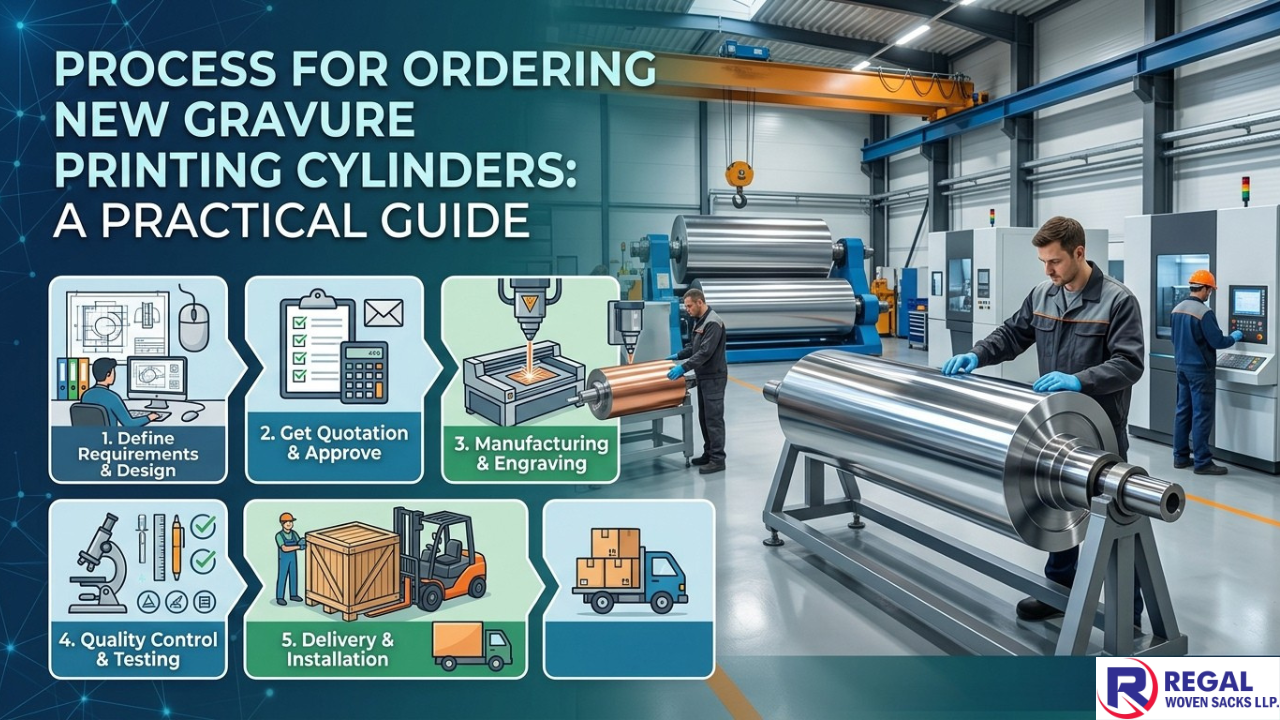
Step 1: Gather Your Technical Specifications
This is where most people make mistakes. They send artwork without the critical technical details that manufacturers actually need.
Before contacting any supplier, make sure you have the following specifications ready:
- Press circumference – Your cylinder must match your press exactly
- Shaft diameter and length – Different presses have different requirements
- Repeat length – The distance your design repeats on the substrate
- Number of colors – One cylinder is required per color (CMYK = minimum 4 cylinders)
- Substrate type – Printing on polyethylene vs paper requires different cell depths
- Production volume – Determines whether standard or heavy-duty cylinders are needed
Get these specs from your press manufacturer's manual. Don't guess. I've seen companies order ₹2 lakh worth of cylinders that physically couldn't fit their press. Painful.
Step 2: Prepare Your Artwork Properly
Your artwork quality directly affects both the cost and lead time of cylinder production. Manufacturers require print-ready files, not rough drafts.
Ensure you provide the following:
- Vector files (AI or PDF format) whenever possible
- High-resolution raster images (minimum 300 DPI) if vector files are not available
- Pantone color codes or exact color specifications
- Clearly marked registration marks and bleed areas
Pro tip: Include a physical sample of your existing packaging if you're matching an established brand look. Color matching from digital files alone rarely works perfectly. We learned this after our first run came out looking like a different product entirely.
Step 3: Choose Between Cylinder Types
Here's where costs diverge dramatically. You've got two main options:
Traditional Steel Base Cylinders
These are the classic option. The printer purchases a steel base (₹1,20,000–₹1,45,000 typically), which gets copper plated and then engraved. You own the base, and it lasts for years.
Best for: High-volume production runs (2+ million impressions) where you'll reuse the same design repeatedly.
Cylinder Sleeves
Modern alternative. Sleeves cost ₹28,000–₹36,000 per color for engraving, and they slip onto interchangeable steel bases that the printer owns.
Best for: Medium runs, multiple designs, or when you don't want to invest in owning base cylinders.
Wait, there's more – if you're printing less than 500,000 units, sleeves almost always make more financial sense. Don't let sales reps push you toward traditional cylinders just because they make more commission.
Step 4: Request Detailed Quotations
Contact at least three manufacturers. Don't just ask for "a quote." Request itemized pricing that includes:
Base cylinder or sleeve cost
Copper plating charges
Engraving/etching fees
Chrome plating costs
Proofing charges
Shipping and handling
Lead time estimate
Warranty terms
The total cost difference between manufacturers can vary by 40-50% for identical specifications. I've seen quotes ranging from ₹1.2 lakhs to ₹2.1 lakhs for the same four-color job.
Price matters, but don't automatically choose the cheapest. Look at their portfolio, ask for customer references, and verify their quality control processes.
Step 5: Approve the Proof Before Full Production
Never skip the proofing stage. Never.
Reputable manufacturers will create printing samples during cylinder production for testing. These samples verify the cylinder's patterns and quality before final delivery.
Request physical proof prints on your actual substrate at your specified line speed. Digital proofs don't show you real-world performance. You need to see how the ink transfers, how colors register, and whether cell depth produces the coverage you need.
We approve proofs within 24-48 hours to keep production moving, but we never rush this step. Fixing problems after chrome plating costs exponentially more than catching them during proofing.
Step 6: Plan for Inspection and Delivery
Quality manufacturers conduct rigorous inspections before shipping. This includes comprehensive checks of dimensions, patterns, and surface quality to ensure cylinders meet printing standards.
However – and this is important – conduct your own inspection upon delivery:
Measure cylinder dimensions against your specifications
Check for surface defects or imperfections
Verify engraving depth consistency
Test fit on your press before removing protective packaging
Document everything with photos. If there's a problem, you want evidence before the cylinder touches ink.
Understanding Lead Times
Standard lead times run 3-4 weeks from artwork approval to delivery. Rush jobs might get done in 10-14 days but expect to pay 30-50% premium pricing.
Factor in:
Design finalization: 3-5 days
Copper plating and polishing: 5-7 days
Engraving: 3-5 days
Chrome plating and finishing: 5-7 days
Quality inspection and shipping: 2-3 days
Plan your cylinder orders at least 6 weeks before you need them in production. Tight deadlines force expensive rush charges and increase error risks.
Common Ordering Mistakes to Avoid
Let's be honest – I've made most of these mistakes myself:
Mistake #1: Ordering cylinders before finalizing artwork. Every design change after engraving starts costs serious money.
Mistake #2: Not specifying cell depth requirements. Different substrates need different ink volumes. Get this wrong and your prints look washed out or oversaturated.
Mistake #3: Skipping the purchase order details. Clearly specify delivery location, payment terms, warranty coverage, and return policies in writing.
Mistake #4: Ignoring cylinder storage requirements. Cylinders should be stored in racks for future jobs with proper handling to maintain quality perfection and ensure long-lasting optimum performance.
Working with International vs. Local Manufacturers
Indian manufacturers typically offer faster turnaround and easier communication. International suppliers (especially from China) often provide lower prices but add complexity with customs, shipping delays, and communication challenges.
We use local manufacturers for urgent jobs and established relationships. International suppliers work for large volume orders where the 15-20% cost savings justify the longer lead times.
Key Takeaway
Ordering gravure printing cylinders requires precise technical specifications, proper artwork preparation, and careful supplier selection. Start with accurate press specs, choose between traditional cylinders (₹1.2-1.5 lakhs) or sleeves (₹28,000-36,000 per color), request detailed quotes from multiple manufacturers, and always approve proofs before final production. Plan 3-4 weeks lead time, inspect deliveries thoroughly, and don't skip quality checks to avoid costly mistakes. The investment pays off in print quality, but only when the ordering process is done right.
The difference between smooth cylinder ordering and expensive disasters comes down to preparation. Know your specs, ask the right questions, and never rush the approval process.
Your print quality depends on it. So does your budget.