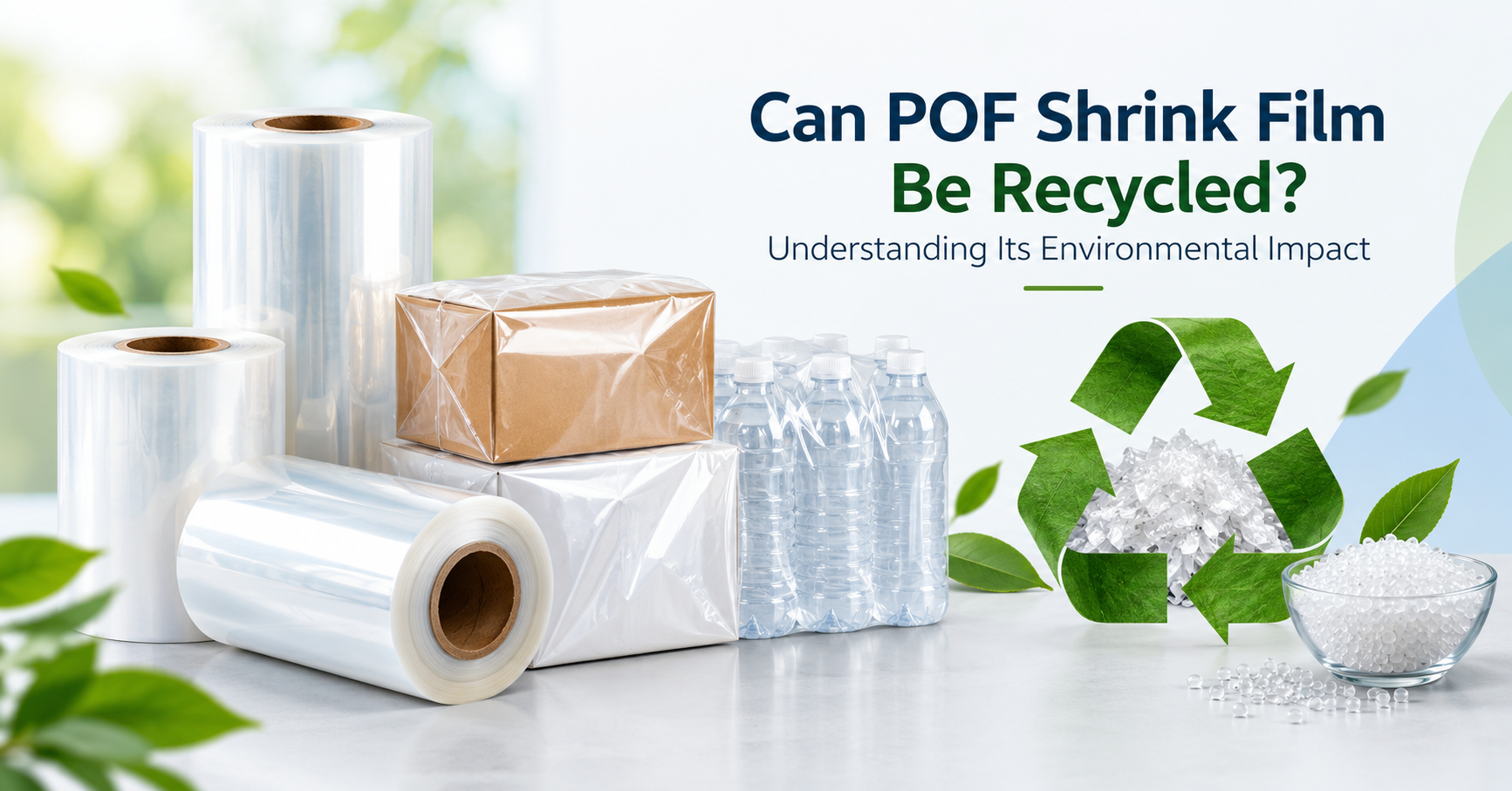
Packaging teams are under growing pressure to show that the materials they choose are responsible ones. Another material that frequently falls under this microscope is shrink film, as it is lightweight, thin and disposable after just one use. As such, it provokes many companies, brand owners and exporters to pose one simple but very valid question about the material: is POF shrink film recyclable?
Fortunately for all parties involved, the answer to the question is a simple "yes." But the thing is that the material cannot simply be thrown into the regular recycling bin at home or on the street, and this is where the confusion usually starts. Regal Woven supplies POF shrink film for manufacturers across India, and the guidance below reflects what we see in real packaging operations.
What Is POF Shrink Film?
POF Shrink Film is a clear and flexible wrapping film formed of polyolefin resin. The following section will describe the composition of this type of film, its behaviour when heated and applications in industry.
Composition and Properties
POF stands for polyolefin. It is a clear, flexible film made from polyolefin resins, mainly polyethene and polypropylene. Polyolefins are among the most widely used plastic families in the world. When heat is applied, the film shrinks tightly around a product and forms a clean, protective wrap. It is known for good clarity, strong seals and low odour.
Where It Is Used
The shrink film packaging process of POF is applied to foods, beverages, cosmetics, stationery, books, ceramics, toys, and online packages. Due to its thin gauge and good shrinking properties, it is ideal for manual and automated packaging lines.
Can POF Shrink Film Be Recycled?
Yes, POF shrink film can be recycled, but it does not belong in household or curbside bins. This section explains why collection is the real challenge and how soft films disrupt sorting facilities.
Yes, but not through regular household bins
POF shrink film is technically recyclable. Polyolefins can be melted and reformed into new plastic products. The difficulty lies in collection, not in the material itself. Thin, stretchy films cannot be handled by the standard sorting systems that manage bottles, cans and rigid containers.
Why Soft Films Create Problems at Sorting Facilities
Most municipal sorting plants rely on rotating drums, wheels and conveyor gears. Soft plastic films wrap around this moving equipment and cause jams. Each jam stops the line, requires manual cleaning and raises operating costs. This is why many facilities do not accept soft films through regular collection, and why such films need a separate route. The same problem is well documented in general plastic recycling practice, where contamination and material form decide whether a plastic is actually recovered.
How POF Shrink Film Is Recycled
Recyclable POF shrink film follows a clear path from clean collection to reprocessing. This section covers segregation, commercial baling of factory scrap, and the secondary products that recycled film is turned into.
Collection and Segregation
Recycling begins with keeping the film clean and dry. Food residue, moisture, labels and adhesive tape reduce the quality of the recycled material and may cause the whole batch to be rejected. Film should be collected separately from wet waste and from other plastics. In India, this means handing it to authorised plastic waste recyclers or collection partners, and not mixing it with general household waste.
Commercial Baling of Clean Scrap
Businesses have an advantage here. Factories, warehouses and packing units produce steady volumes of clean shrink film scrap, such as end rolls, trimmings and used wrap. This scrap can be compressed into bales and collected directly by specialised industrial recyclers. Baling reduces storage space, lowers transport costs, and keeps the material free from contamination. For most manufacturers, this is the most reliable route for POF shrink film recycling.
Reprocessing Into Secondary Products
The recycling process involves shredding, washing, melting, and formation of pellets from the film. These pellets are made into secondary plastic materials like plastic bags, tubes, and traffic cones. The recycled plastic is rarely made into new food-grade films; however, it extends the useful life of plastics while at the same time reducing the need for fresh resin.
POF Shrink Film Environmental Impact
POF offers real environmental advantages over older films, but it is not a zero-impact material. This section looks at its chlorine-free composition, thin gauges, and why standard POF does not biodegrade.
Free From Chlorine
Older shrink films were often made from polyvinyl chloride, also known as PVC. PVC contains chlorine and can release harmful fumes when it is heated or burned. POF does not contain chlorine and does not give off toxic fumes during normal sealing and shrinking. This is one of the main reasons the packaging industry has moved towards POF, and it is a key point in any discussion of POF shrink film environmental impact.
Lower Plastic Use Through Thin Gauges
Modern POF film is engineered in very thin gauges, commonly between 12 and 15 microns. A thinner film means less plastic is needed to wrap each package. Over thousands of units, the saving in material and transport weight is significant. Our guide on POF shrink film thickness explains how to choose the right gauge without weakening the pack.
Why Standard POF Is Not Biodegradable
It is crucial to recognize the limitations. Conventional POF is a petrochemical-based plastic and, as such, it does not degrade. Should it be discarded irresponsibly or dumped into a landfill site, it will last in the environment for hundreds of years. That is why the end-of-life disposal path plays a role just as significant as the material itself. Shrink wrap that is recyclable provides no environmental advantage without actually being recycled.
POF Shrink Film Sustainability in the Indian Context
Sustainability claims need to reflect Indian regulations and real recycling channels. This section explains Extended Producer Responsibility and offers a balanced view of what sustainable POF shrink film actually means for businesses.
Extended Producer Responsibility
The Plastic Packaging in India is governed by the Plastic Waste Management Rules and the Extended Producer Responsibility (EPR) approach, which is enforced by the Central Pollution Control Board. The EPR approach holds accountable the producers, importers, and brand owners for the plastic packaging that goes into the market. As flexible plastic films are included under this regime, it becomes important for companies using shrink films to consider the aspects of their collection and recycling. It is wise to look at what your obligations are from the CPCB and the State PCB.
A Realistic View of Sustainable POF Shrink Film
Sustainability of POF shrink film should be referred to with care. POF has less environmental impact than PVC, requires less material in thin gauges, and it is recyclable through proper channels. It is not an environmentally neutral product. The balanced statement would be that sustainability of POF shrink film is determined by three factors: the minimal use of the film, the cleanliness of the scrap, and recycling. Companies that integrate all three components into their practices can call their packaging eco-friendly POF shrink film with much more credibility. If your brand is also looking at compostable options, our blog on biodegradable POF shrink film covers that side of the discussion.
How Businesses Can Make POF Shrink Film Packaging More Responsible
Small operational choices make packaging noticeably more responsible. This section gives practical steps on choosing the right gauge, keeping scrap clean and separate, and working with a dependable manufacturer.
Choose the Right Gauge and Size
Use the thinnest film that still gives a secure, tight wrap. Oversized film or extra layers add cost and waste without improving protection. Correct sizing also reduces trimming scrap on the packing line.
Keep Scrap Clean and Separate
Set up a simple collection point on the shop floor for clean film scrap. Keep it away from food waste, paper and mixed plastics. Clean, dry material has a higher recycling value and is far easier for a recycler to accept.
Work With a Responsible Manufacturer
The manufacturer you choose affects both quality and waste. Consistent gauge, reliable shrink ratio and dependable supply mean fewer failed packs and less rejected film. Regal Woven focuses on consistent quality and practical guidance, so customers can use environmentally friendly POF shrink film in a way that suits their production and compliance needs.
Conclusion
The good news about POF shrink film is that it is recyclable via appropriate channels and much cleaner than PVC, but responsible recycling makes all the difference. Here is a summary and the way forward.
POF shrink film is recyclable, but via appropriate channels only. This material should not be put in general waste bins on curb-sides or at home, since thin plastics jam sorting machinery. Industrial clean scrap may be baled and delivered to recycling companies that process it into other products like bags, tubing and traffic cones. In contrast to PVC, POF is chlorine-free and does not emit toxic gases, and its thin gauges mean less plastic per package. However, standard POF is not biodegradable and requires responsible recycling.
When it comes to business use, the way forward is quite straightforward. Choose the proper gauge, keep scraps clean and recycle via a certified recycling company. Should you be looking for packaging for the next order, you may get help from Regal Woven selecting the most suitable POF shrink film for your needs.