Selecting the proper sacks is one of the initial things that should be taken into account by the grain company. It will affect not only the price per pack but also its shelf life and the way customers will perceive the pack in the store. There are two popular kinds of sacks on the market, namely PP woven sacks and BOPP laminated sacks. These products are made of the same material, polypropylene, but their qualities in the warehouse and store differ significantly. This article will discuss the manufacturing of each pack type, their application areas and choice criteria for rice, wheat, pulses and other food grains.
What Are PP Woven Bags?
PP woven bags are sacks made from strips of polypropylene woven together into a strong fabric. Polypropylene is a lightweight thermoplastic polymer known for its tensile strength, chemical resistance, and low cost. These qualities explain why PP woven bags have become a standard in agriculture and bulk trade.
How PP Woven Bags Are Made
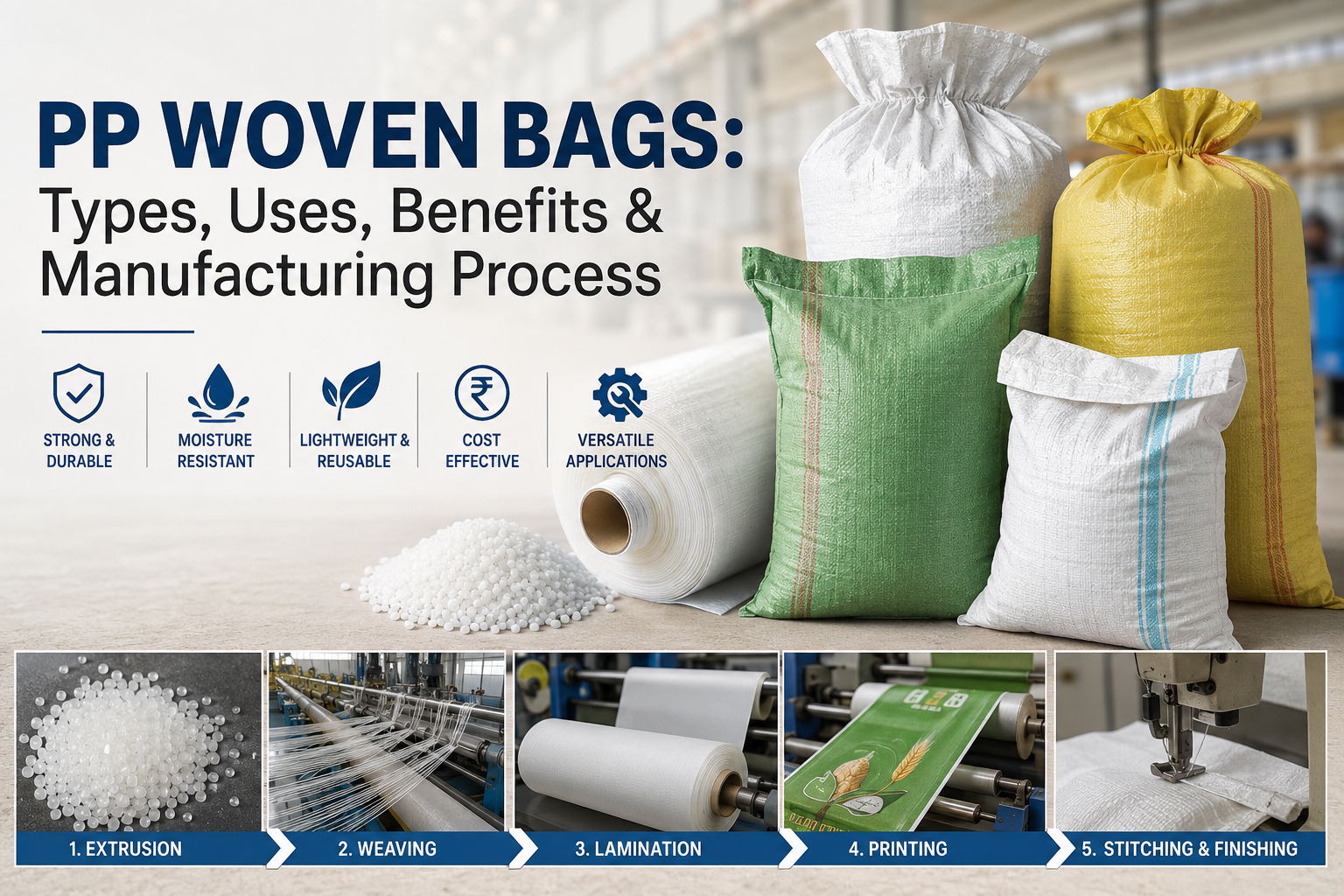
This process starts off by melting and then extruding polypropylene pellets into a thin film. This film is then sliced into narrow tapes and then stretched to give the tapes their strength. In a loom, the tapes are woven into a cloth in a crosswise manner. This forms a one-layer cloth from the tapes. The cloth is finally trimmed, stitched or glued and then printed.
Key Features of PP Woven Bags
It is the weaving that results in the bag being very tough in terms of texture and load bearing capability. The average bag can take 25 kilograms, 50 kilograms, or even more loads without getting torn, and it is good for rough handling, stacking, and long-distance hauling. The bag is semi-permeable because of the minute holes between the tapes. This could be an advantage for some products, but at the same time, it makes the bag moderately resistant to dust and moisture, unless there is an inner layer or coating.
What Are BOPP Laminated Bags?
The BOPP laminated bag uses the same woven polypropylene fabric with a print layer added on its exterior. BOPP means biaxially orientated polypropylene and refers to a film that undergoes stretching in two directions when manufacturing it. As indicated in BOPP film sources, this film ends up being clear, rigid, and waterproof. This gives the bag strength from the woven fabric and an exterior quality skin.
Structure of BOPP Laminated Bags
The BOPP Bag contains two layers of functionality. The inner fabric layer holds the load and provides tear resistance. The outer film layer is used to protect the product and carry the artwork. It is designed with the print on the backside of the material, which is laminated on the fabric layer and, hence, is not prone to wear and tear due to handling. The brands are able to choose either a glossy or matte finish based on the requirement.
Why Brands Choose BOPP Bags
There are basically two reasons why a brand chooses BOPP bags. First, the brand requires the bag for better presentation, and second, for better protection of the product. The graphic content is very vivid and moisture- and dust-free because of the sealed surface.
PP Woven Bags vs BOPP Bags: Key Differences
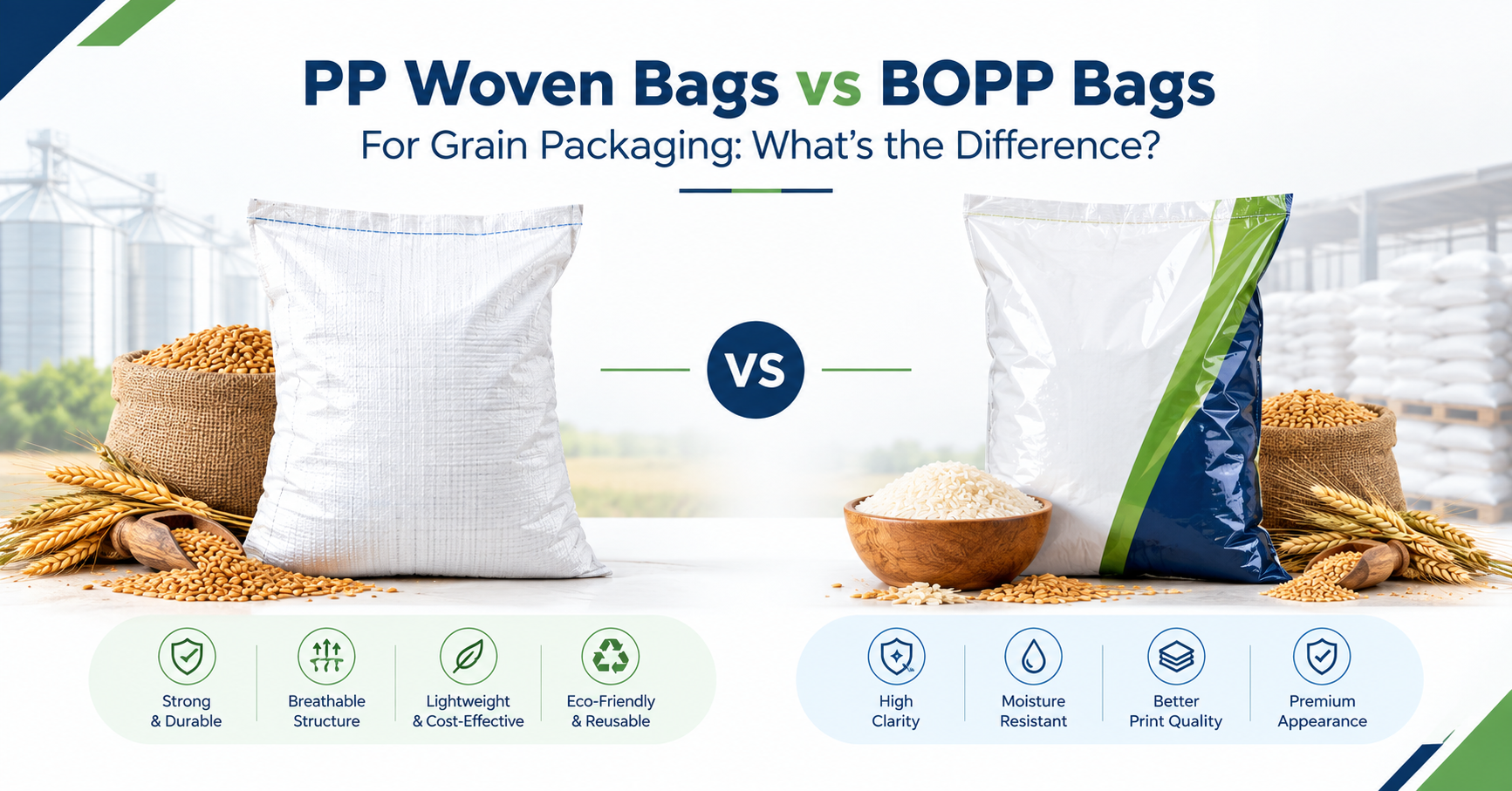
When comparing PP woven bags vs BOPP bags for packaging, five factors decide most purchases. The table below gives a quick view, and the sections that follow explain each point.
| Factor | PP Woven Bags | BOPP Laminated Bags |
| Structure | Single layer of woven polypropylene tape | Woven polypropylene fabric with a laminated BOPP film on the outside |
| Surface Finish | Rough, textured | Smooth, glossy or matte |
| Printing | Flexographic printing directly on the fabric; simple logos and text | Rotogravure printing on the film; photo-quality, multi-colour graphics |
| Moisture and Dust Protection | Moderate; breathable unless lined or coated | High barrier against moisture, dust, and contaminants |
| Strength | High load capacity from the woven fabric | Same fabric strength, plus better surface and print protection |
| Cost per Bag | Lower | Higher due to lamination and premium printing |
| Best Use | Bulk transport, wholesale storage, institutional supply | Retail-ready, branded grain packs with shelf appeal |
| Typical Grain Use | Loose bulk rice, wheat, pulses, maize | Branded rice, flour, pulses, and speciality grains |
Structure and Material
A PP woven bag is made of one woven tape. A BOPP bag, on the other hand, has a laminated film covering a woven base. This additional layer alters the properties of the bag as well as its production process.
Printing and Branding
PP woven bags use flexographic printing directly on the textured fabric. This works well for logos, bag weight, and basic text, but the rough surface limits fine detail and the number of colours. BOPP bags typically use rotogravure printing on the film before lamination. This allows photo-quality images, gradients, and sharp text, which is why most retail-ready grain brands use this format.
Moisture and Barrier Protection
An unlaminated PP woven bag provides average levels of protection and allows for moisture transfer from the environment through gaps in the weaving pattern. BOPP laminated bags provide better protection from moisture, dust, and environmental contaminants. The issue is quite relevant during the monsoon season, in coastal areas, and for products that spend a lot of time at retail outlets.
Strength and Durability
Both bags use identical woven material for strength; therefore, their carrying capacities are equal if the same fabric quality is used. There will also be added abrasion resistance and preservation of print due to BOPP film. However, the simple PP woven bag can use a more robust fabric if the key concern is strength.
Cost Comparison
PP woven bags are inexpensive because they do not have to go through the process of lamination and special printing. On the other hand, the cost of producing BOPP bags is higher due to the additional film used in the manufacturing process, as well as the gravure cylinders. However, this increased cost might be justified by better presentation.
PP Woven Bags for Grain Packaging
PP woven bags remain the practical choice for bulk grain movement, offering strength, breathability, and low cost across wholesale rice, wheat, and pulses.
PP Woven Bags for Rice
PP woven bags for rice are frequently seen at the mandi, wholesale and distribution stages. A lot of rice is traded here, and the buyers care less about their visuals and more about their weight and quality. The quality woven sack will handle weights up to 25 kg and 50 kg, will stack neatly in warehouses, and is inexpensive per kilogram of load. If there is a need for additional protection, the inner polyethylene lining could be used.
Where PP Woven Bags Work Best
PP woven sacks used for grain packaging are appropriate for bulk transportation of agricultural commodities, storage of wholesale and government/governmental supplies of commodities, and exported commodities that will be repackaged at their destination. The sacks are also suitable for pulses, wheat, maize, and sugar transported between processors and traders. Any application where cost and strength matter more than shelf appeal is a good fit. For food contact, buyers should check that the bag is made from virgin, food-grade polypropylene and meets the packaging rules set by FSSAI.
BOPP Bags for Grain Packaging
BOPP bags deliver glossy branding, superior moisture protection, and shelf appeal, making them ideal for premium rice, flour, and packaged grain retail.
BOPP Bags for Rice
The BOPP bags for rice have been chosen by many for premium and branded rice brands such as basmati. The glossy packaging shows all the information about the name of the brand, the quality of the grain, and the history behind it. In addition, the sealed packaging helps protect the rice from dust and moisture during transportation.
Where BOPP Bags Work Best
The BOPP bags can handle food grains packaging bags available in retail format weighing 5 kg, 10 kg, 25 kg, and 50 kg. The bags suit products such as branded rice, flour, pulses, and specialty grains marketed by supermarkets and via online and modern trade channels. They can also be considered suitable for exporters who wish to have a more clean appearance when they reach the destination ports. There is one thing that needs to be noted – since the lamination on the outside seals the bag, proper drying of the grains is necessary.
How to Choose Between PP Woven Bags and BOPP Bags
Choosing between them depends on sales channel, storage conditions, and budget - bulk trade favours woven bags, retail branding favours BOPP.
Match the Bag to Your Sales Channel
Begin by considering where the products will be marketed. In case it is in bulk to distributors and manufacturers, then a normal woven bag is sufficient. However, if the product makes its way to the consumer through shops or online stores, then the extra investment in BOPP is necessary. Most grain companies make use of both kinds, using the woven bags for bulk sales and BOPP for the brands.
Consider Storage and Transport Conditions
Consider the period that the grain will be stored and the climatic conditions. Extended storage periods in humid weather conditions make the laminated or lined bag the right choice while short periods, dry conditions and large volumes of grain transportation make the simple woven bag ideal.
Balance Budget and Brand Goals
Consider the overall return on investment, rather than just the cost per bag. The BOPP bag which allows your brand to command a better price may earn you a higher profit than the lower-cost sack. The lower-cost woven bag may be necessary for maintaining margins in the commodity market.
Why Choose Regal Woven for Grain Packaging Bags
Regal Woven supplies PP woven bags and laminated packaging for food and agricultural products. The team works with grain businesses to match fabric weight, bag size, lamination, and print design to each product and sales channel. Custom sizes, printed designs, and food-grade material options help brands keep their packaging consistent across batches. If you are unsure whether a plain woven bag or a BOPP laminated bag suits your grain, Regal Woven can guide you based on your volume, storage conditions, and target market.
Conclusion
Both PP woven bags and BOPP bags have unique advantages. The former offers durable and economical packaging while the latter provides superior printing, better barrier performance, and a marketable look. What you choose depends on how you market your grain, how long it is stored, and the level of branding you want to use. These three criteria should be determined first before choosing a bag.
Frequently Asked Questions
What is the main difference between PP woven bags and BOPP bags?
PP woven bags are a single layer of woven polypropylene, while BOPP bags add a printed, laminated film over the same woven base for better looks and moisture protection.
Which bag is better for storing rice for a long time?
A BOPP laminated bag or a PP woven bag with an inner liner works better for long storage because both limit moisture and dust entry.
Are BOPP bags stronger than PP woven bags?
Strength comes mainly from the woven fabric, so both bags carry similar loads at the same fabric grade, and the BOPP film adds surface protection rather than extra load capacity.
Are PP woven bags safe for food grain packaging?
Yes, PP woven bags are safe for food grains when they are made from virgin, food-grade polypropylene and meet applicable food-contact standards.
Why are BOPP bags more expensive than PP woven bags?
BOPP bags cost more because they need an extra film layer, gravure printing, and a lamination process on top of the woven fabric.